Get your car ready for a winter road trip before the first snow.
Most winter trouble starts before you leave: worn tires, a weak battery and a half-empty tank. This guide covers the checks that matter, the small kit worth carrying, and what to do if you get stuck.
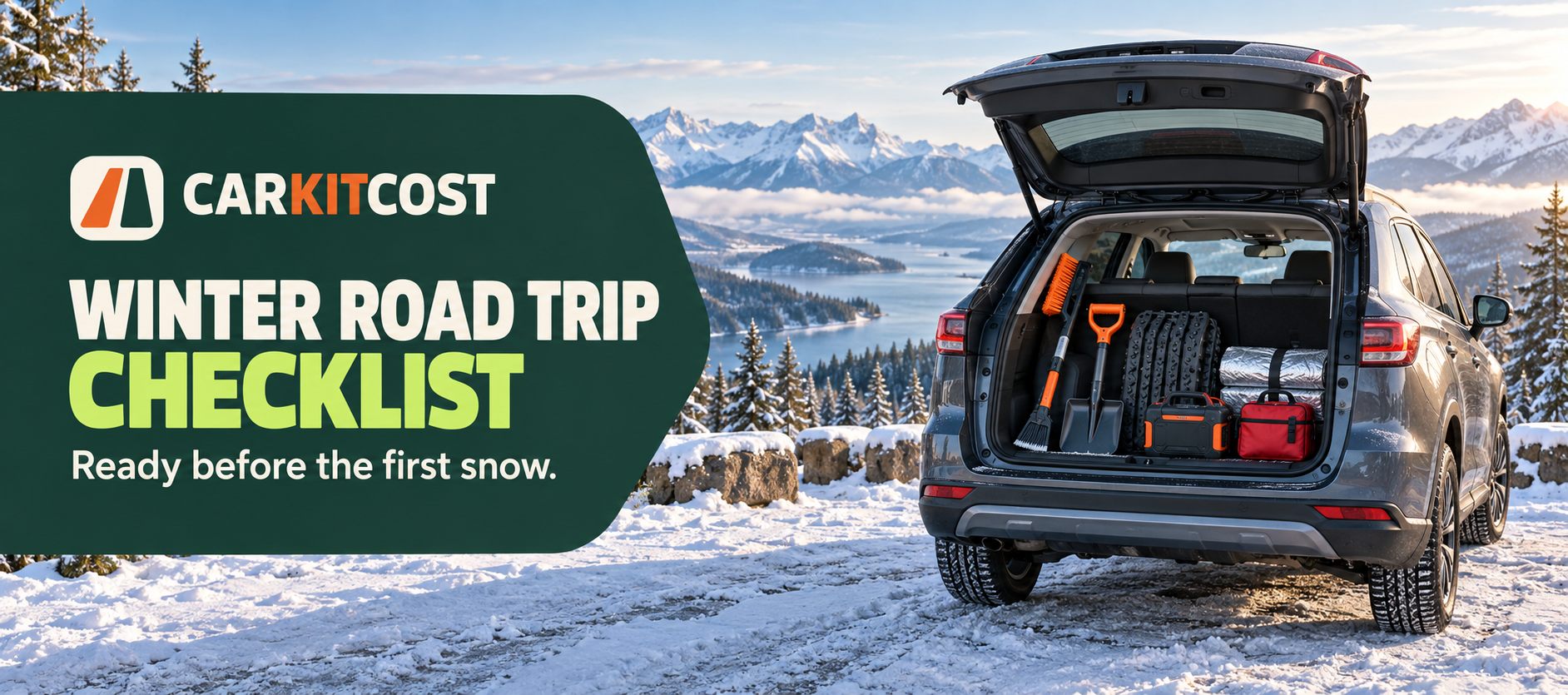
1. Check the car the week before you go
A short inspection catches the problems that cold weather turns into breakdowns.
- Tires: check tread and pressure. Cold air lowers tire pressure by roughly 1 psi for every 10°F drop, so check them cold on the morning you leave. For tread, hold a penny upside down in the groove: if you can see the top of Lincoln's head, the tread is worn and winter traction will be poor.
- Battery: cold weakens batteries, and an older one is the most common reason a car won't start. Most auto parts stores will test it for free.
- Wipers and washer fluid: replace streaking blades and fill the reservoir with fluid rated for freezing temperatures, since plain fluid can ice up on the glass.
- Fuel: keep the tank at least half full so a delay doesn't leave you without heat.
2. Pack for being stuck, not for driving
You will use most of this kit rarely, but it is what separates a cold hour from a dangerous night. Add a warm hat, gloves, a flashlight or headlamp, water, snacks and a phone cable to the items below.
3. Match the kit to the trip
4. Drive for the surface, not the speed limit
Slow down and make every input gradual: smooth steering, gentle braking and light throttle. Leave much more room than usual, because stopping distances on ice can be many times longer than on dry pavement. Skip cruise control on wet, icy or snowy roads, brake before a turn rather than in it, and expect bridges and overpasses to freeze first. Clear snow from the roof, hood and lights before you move, so it doesn't slide onto your windshield or onto the car behind you.
5. If you get stuck
Stay with the vehicle. It is easier for rescuers to find, and it protects you from the weather. Turn on the hazard lights and call for help with your exact location. Before running the engine for heat, clear snow from around the exhaust pipe so carbon monoxide can't build up in the cabin, then run it in short stretches, for example 10 minutes every hour, with a window cracked slightly.
Frequently asked questions
Do I need snow tires, or are all-season tires enough?
It depends on where you drive. All-season tires are usually fine for occasional light snow on plowed roads. If you regularly drive on snow or ice, or cross mountain passes, dedicated winter tires grip noticeably better in the cold. Some passes also set their own tire or chain rules, so check before you leave.
How full should the gas tank be in winter?
Keep it at least half full. A delay or a closed road can leave you idling for hours, and you want enough fuel to run the heater in short stretches.
Is a jump starter worth carrying in winter?
Usually yes. Cold weather is when marginal batteries fail, and a self-contained jump starter means you don't need another car. Store it inside the cabin and keep it charged, because cold also drains it.
What can I use for traction if I don't have traction mats?
Cat litter, sand, or even a floor mat pushed under the drive wheel can get you moving as a stopgap. Proper traction mats work better and are easier to carry, but a stopgap beats being stuck.
Build a winter setup for your car
The planner is pre-set to freezing weather. Choose your vehicle, trip length and who is coming.
Related: the cross-country drive guide and the trunk organization guide. As an Amazon Associate, CarKitCost may earn from qualifying purchases. Product links are selected for usefulness and trip fit, not placement fees.